
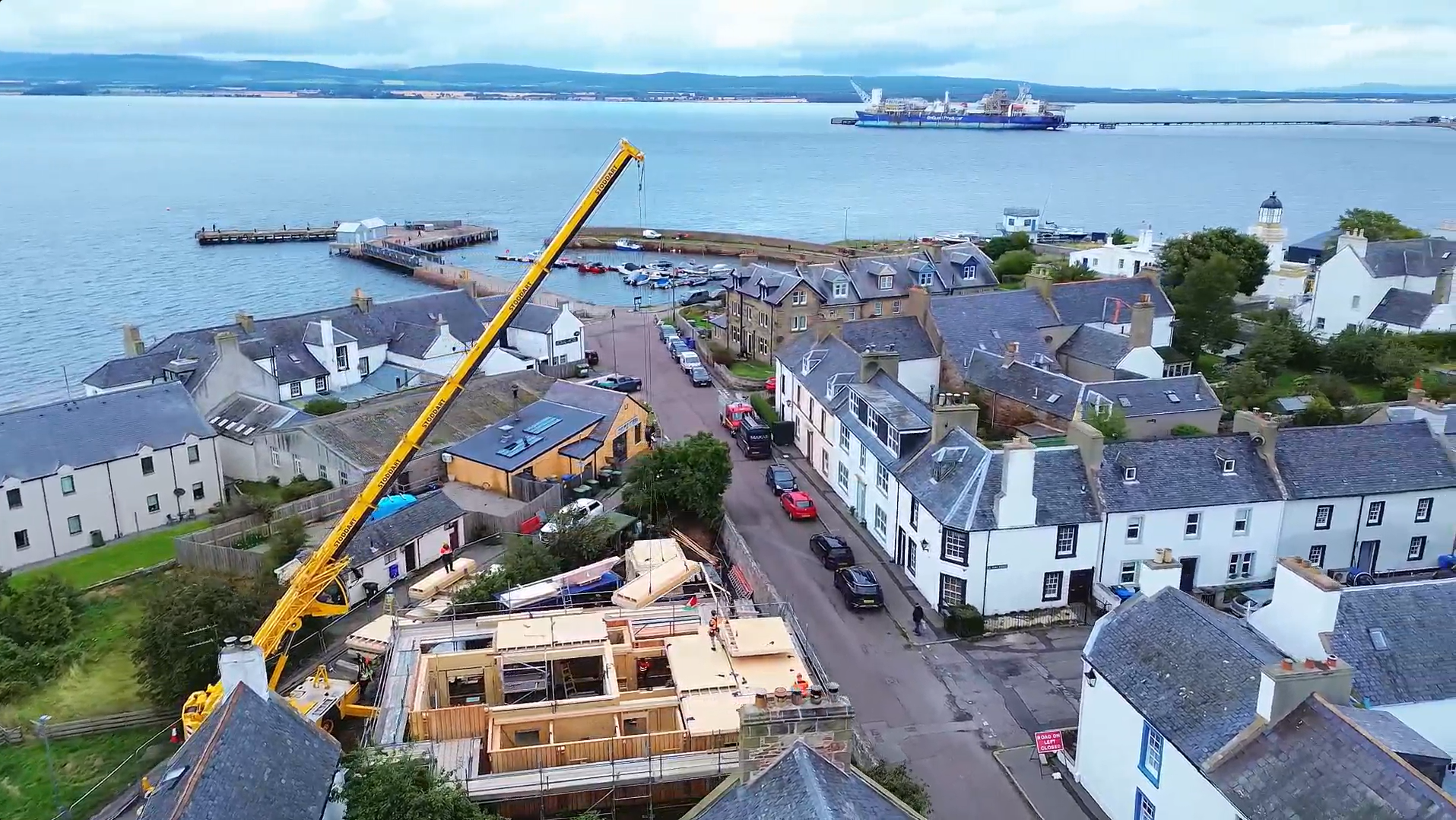
Energy Efficient Homes
MAKAR’s home and building designs are optimised for energy efficiency, ensuring predictable energy usage and significantly reduced heating costs. This not only makes our homes more affordable to live in but also contributes to a sustainable future by reducing reliance on fossil fuels. Our fabric-first approach guarantees superior thermal efficiency, minimises cold bridges, and ensures high levels of airtightness, boosting both comfort and energy efficiency.
We have significant experience in delivering certified Passivhaus projects (also known as Passive House or Passiv Haus) using healthy, ecological materials. Of the many, these include the GALE visitor centre at Gairloch and an award-winning private home in Strathpeffer.
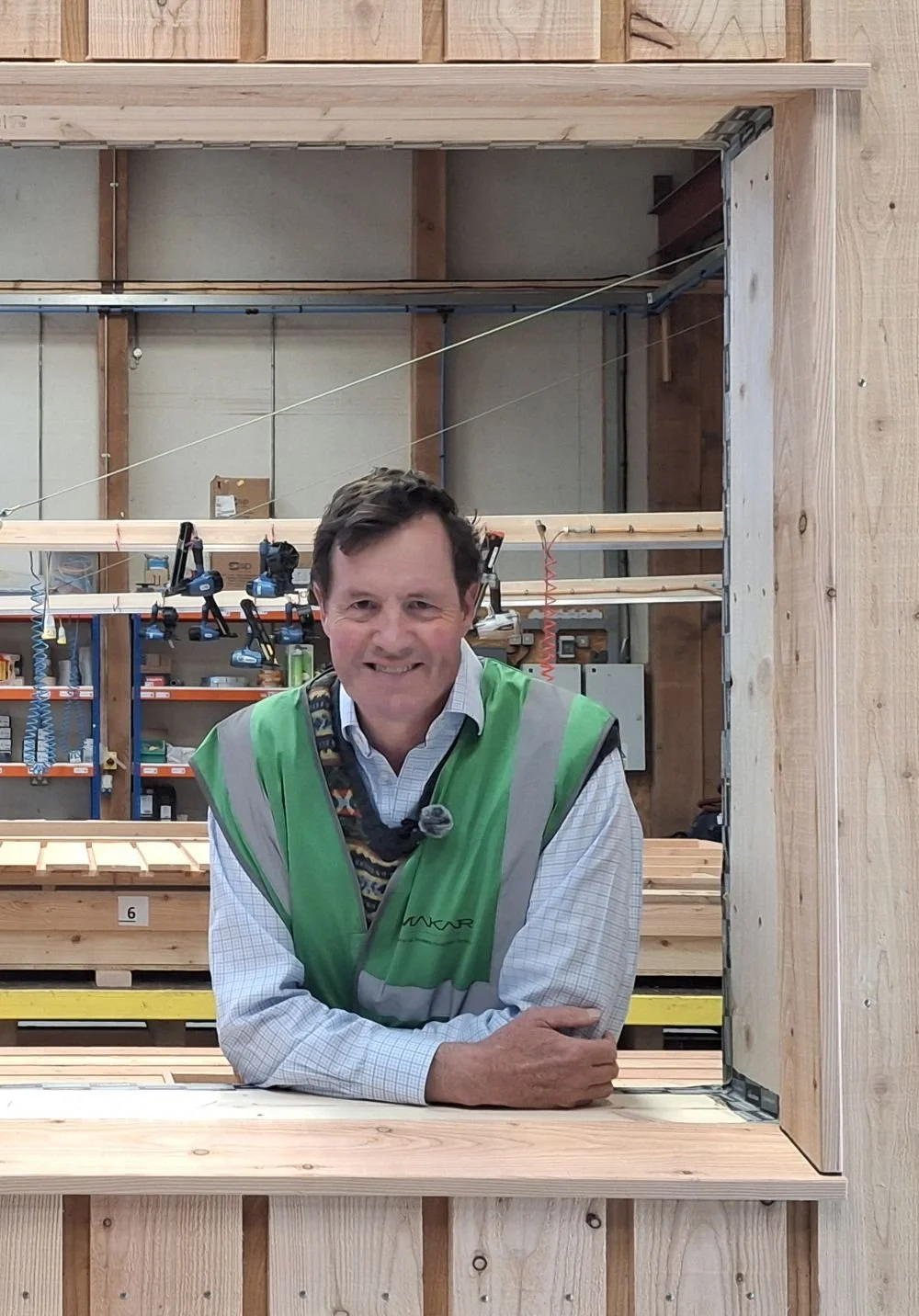
“MAKAR do environmentally friendly houses. They are far far cheaper to heat – 15% of the price of a normal house to heat – and that matters a great deal because we have the highest level of fuel poverty in Britain, we have weather that is much more challenging, and we need housing of this quality to live comfortably in remote Scotland.”
Angus MacDonald, MP for Inverness, Skye and West Ross-Shire
We have teamed up with The Data Lab and Highlands and Islands Enterprise for a 15-month project that will provide verifiable third party metrics to determine exactly the heating and running costs of our Paradigm Prototype Home.
The prototype was built to help solve the housing and climate emergencies currently throughout Scotland and the UK. As well as being low carbon to deliver (with previous studies on equivalent MAKAR affordable family homes showing they are carbon negative on delivery, each locking up 39 metric tonnes of sequestered carbon!), these homes are designed to tackle fuel poverty for occupants with modelled heating costs at £6.05 per week, compared to £45.25 per week for the average UK home.
This project is funded by the Scottish Government through the National AI Adoption Programme, which helps SMEs across Scotland explore and adopt AI to improve productivity.
A Passivhaus approach
Passivhaus is a proven international standard that focuses on dramatically reducing a building’s energy demand while maintaining excellent indoor air quality and thermal comfort. It is ideally suited to Scotland’s rural context, where resilience, low operating costs, and environmental sensitivity are essential. With the addition of renewables, it is possible for homes to achieve Net Positive values, whereby the house generates more energy than it requires to use.
MAKAR homes already achieve the majority of the Passivhaus criteria with our panel system, which we have been developing over the last two decades. To obtain a certified Passivhaus standard our homes require site-specific PHPP calculations that consider factors such as house orientation and altitude. Designs and specifications may require adjustment to meet the Passivhaus criteria.
A Scottish Passivhaus Standard
The Scottish Government are set to implement the Scottish equivalent to the Passivhaus standard, which will become mandatory from 2029. As regulations tighten in response to climate goals, properties, like MAKAR homes, already able to meet these standards will retain their value and desirability, making these homes future-proof investments.
-
We employ super-insulated envelopes using dense natural cellulose insulation called Warmcel in walls, floors, and roofs.
Warmcel is a recycled newspaper insulation with very low embodied energy, as well being an inert material with no off-gassing of Volatile Organic Compounds. Warmcel is natureplus® certified, recognising a product that meets the highest standards from raw material sourcing or extraction, to low emissions and clean production methods. The hygroscopic properties of Warmcel helps moisture to naturally migrate to the outside of the building fabric without building up on structural elements. Boron salts added to Warmcel deter vermin, insects and mould growth as well as providing fire retardant properties. The specific heat capacity of Warmcel provides comfort in both winter and summer as both insulation and thermal mass.
This material not only provides excellent thermal resistance but also contributes to moisture control and sound dampening.
Wood fibre boards are fitted externally and around windows to provide a full insulation jacket to the house. Like Warmcel the boards deter vermin and insects, and are suitable for external installation, behind the rainscreen cladding board.
-
Triple-glazed windows are carefully positioned to maximise passive solar gain while minimising heat loss. With durable timber frames, these windows enhance the overall integrity of the building envelope.
-
We rigorously test every terrace home for airtightness, targeting less than 0.6 air changes per hour. This ensures minimal heat escape and eliminates drafts, resulting in a consistently comfortable indoor environment.
-
This advanced system continuously refreshes indoor air while recovering heat from outgoing stale air. It reduces energy loss and improves indoor air quality, improving you and your family’s health and well-being.
This approach ensures heating isn’t a bolt-on, but incorporated into building design from the beginning.
-
MAKAR homes are designed to avoid heat leakage through joints and structural connections, ensuring thermal performance is not compromised.
This design, combined with our breathing wall approach, prevents condensation and mould.
What underpins MAKAR’s Passivhaus approach?
Our use of the Passivhaus Planning Package (PHPP) allows us to model and verify energy usage during the design stage. Performance targets are therefore embedded in the design and achievable from the outset. For residents, this translates to year-round comfort: cool in the summer, warm in the winter, and well-ventilated throughout.
As regulations tighten in response to climate goals, properties already meeting or exceeding these standards will retain their value and desirability, making these homes future-proof investments. For developers, public authorities, and private buyers alike, it’s a sensible choice with a long-term payoff.
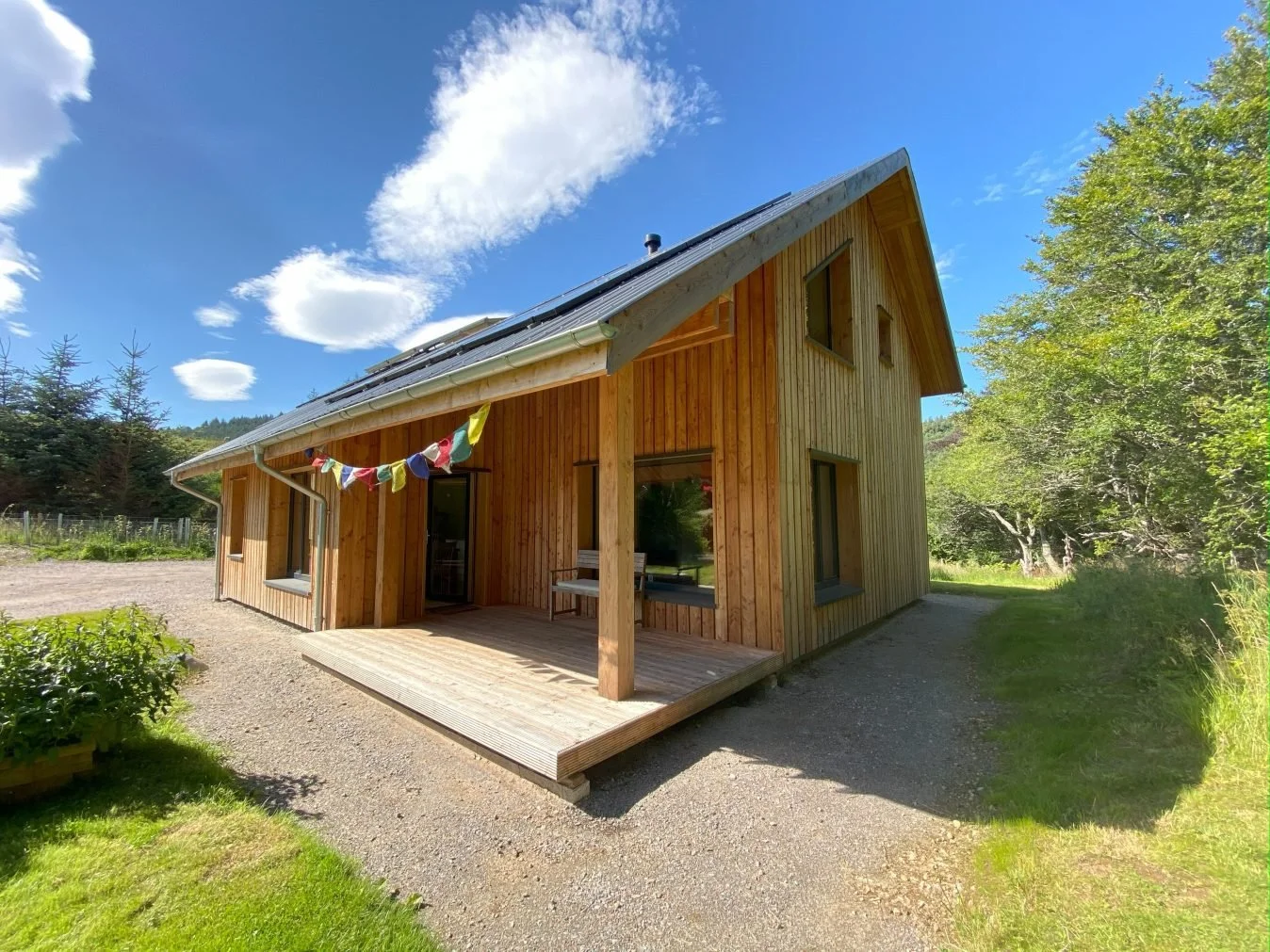
We have lots of experience designing and building timber Passivhaus homes from natural materials.
Our three-bed Passivhaus in Strathpeffer won Best New Build and the Product Innovation award from the Alliance for Sustainable Building Products in 2020.
The judges were particularly impressed by the high standard of finish to the house as well as the replicability of the MAKAR Passive construction system in offering a sustainable method for achieving Passiv Haus.
What is Mechanical Ventilation with Heat Recovery (MVHR)?
Most older homes are very air leaky, and suffer from draughts. This means higher energy bills and can create an uncomfortable environment.
Modern homes, on the other hand, are very air-tight and suffer few leaks. This means that energy bills are lower, but a ventilation system is required to refresh the internal air periodically.
MVHR is a type of whole-house ventilation. Because MAKAR homes are airtight to a high standard, we use MVHR to ensure indoor air quality is maintained. Moisture can be dealt with using the breathing wall, but we also have to refresh our indoor air to deal with pollutants and CO2 build-up. The MVHR unit transfers the heat of outgoing stale air to the fresh incoming air, ensuring that you lose as little energy as possible, and that fresh air delivered around the home is pre-warmed.
Frequently Asked Questions
-
Energy bills vary according to your own habits, your site conditions and the design of your home. Using Passiv Haus software we are able to model the likely energy requirements for space heating, based very accurately on the MAKAR system – down to the number of screws in the walls! According to the UK government a typical UK three-bed house will use over 15,000 kWh of energy per year on heating, lighting and cooking whereas a typical MAKAR three-bed will require just over 3,000-4000 kWh per year.
The modelled heating bill for our family Paradigm home (2-bed plus office), is £6.05 per week, compared to a national average of just over £45 per week.
-
In short yes, many MAKAR homes use some type of renewables: This includes solar panels, air and ground source heat pumps, back-boiler wood burning stoves, rainwater harvesting and PV battery systems. Solar PV and solar thermal panels can be installed in our workshop, negating the requirement for scaffolding on site.
We are dedicated to building ‘fabric first’ homes, which reduce energy requirements in the first instance, and we add renewables based on our customers’ preferences in order to complement this approach.
Speak to the Design team about your preferred strategy for energy and renewables.
-
All MAKAR homes use the same kit, which far exceeds baseline Building Regulations. We typically achieve U values of 0.15 W/m²K (walls) and 0.12 W/m²K (roof). We use timber-framed triple glazing which typically has a U-value of 0.93 W/m²K.
-
Another phrase for ‘breathing wall’ is vapour permeable. This means that moisture, in the form of vapour, is able to move through the wall construction, from inside to outside, due to the properties of the construction materials. Think of a top-quality, wind and waterproof jacket that is also able to breath.
Because we use breathing insulation, including Warmcel recycled newspaper and wood fibre board, our floors, walls and roof are able to allow moisture to pass from inside the building to outside.
Breathing is a particularly important aspect of the MAKAR system. Many other modern constructions reply on a plastic-based vapour barrier to stop moisture getting into petrochemical-based insulation that don’t have breathing properties. This results in moisture getting trapped inside the building, and relies on energy-losing ventilation systems to deal with it. The MAKAR breathing wall contributes to a healthy indoor atmosphere.
Find out more about our breathing walls and our design, manufacturing, and assembly process.